




Have you ever given your state flag much thought? If you’re like most people, you probably haven’t. In fact, many people probably couldn’t even pick their state flag out of a lineup. That doesn’t mean they aren’t important. In fact, they’re important enough that there has been a movement to replace many of them, usually with something bland and less representative of their respective states.
That is a charitable interpretation. One could argue that the changes were done to erase history.
Many state flags remained unchanged for decades; other states adopted new designs, and others are debating whether their flags should better reflect “modern values and identities,” whatever that means.
The most obvious and perhaps the most understandable changes are in states that were part of the former Confederacy and had—or continue to have—Confederate symbols as part of their state flag.
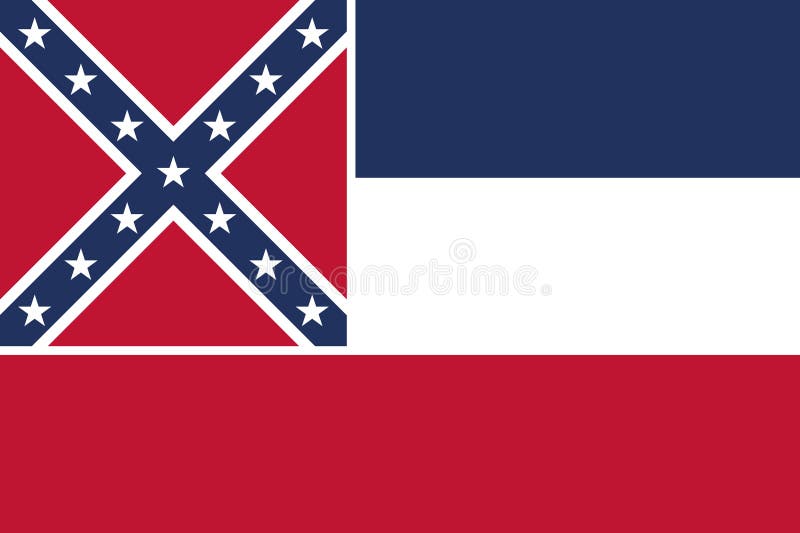
In 2020, Mississippi retired its previous flag, which included the Confederate battle flag. Following years of public debate and calls for change after the George Floyd riots, lawmakers approved a new design featuring a magnolia flower surrounded by stars and the words “In God We Trust.” The new flag was overwhelmingly approved by voters later that year.
In 2001, Georgia removed the Confederate Battle Flag but continues to use the Stars and Bars, which was the national flag of the Confederacy.
Other states changed their flags in recent years, including Minnesota in 2024, which changed it because the old flag was allegedly offensive to indigenous peoples. Unfortunately, the new flag, like many modern replacements, is rather saccharine, seemingly representative of nothing.
Also in 2024, Utah changed its flag but only to be more distinctive, not to remove any “offensive” imagery. Its flag was dark blue with a state seal in the center and looked like many other state flags. Utah wanted to stand out.
This brings us to the Commonwealth of Massachusetts, which, like other states, is considering changing its flag due to allegedly offensive imagery, this time of an American Indian warrior with its spear turned upside down, representing peace. Above that is an arm representing the American Revolution being won. The sword has nothing to do with the image of the warrior and is not threatening it, despite the claims of some critics.
The flag of Massachusetts, adopted in 1908, is distinctive, with its imagery on a white background, with the motto in Latin on either side: Ense petit placidam sub libertate quietem, which means “By the sword we seek peace, but peace only under liberty.” The motto was adopted in 1775, at the start of The American Revolution.
How the flag and motto are offensive is a mystery but some in state government insist that it is. The proposal to remove a native warrior from the flag will not honor the indigenous people but erase them from public sight. Massachusetts held a contest for a replacement last year, and the entries were so awful that even officials in Boston, not normally known for common sense, rejected the proposals. There is another contest being held, but hopefully common sense prevails—the people of the Commonwealth do not want the change.

The push in Massachusetts, as in other states, was to erase history and replace it with something bland and insipid. Not all states succeed in erasing their history, however. The voters of Illinois and Maine both rejected changes to their state flags, showing a great deal of common sense.
Is fighting over the redesign of state flags a hill to die on? Perhaps not, as most people pay no attention to state flags, even in state governments. However, flags are intended to provide continuity. They remind citizens that they belong to something larger than the debates of the moment. Constantly revisiting them risks turning enduring symbols into political battlegrounds. Should every historical symbol be judged primarily through today’s political and cultural lens? No, they should not. It is a fight worth having, especially in an age where the past is ignored except when convenient.
